How to Use Ferro Silicon Alloy for Enhancing Metal Production?
Ferro Silicon Alloy plays a crucial role in metal production. This alloy enhances the quality and properties of metals. According to Dr. Emily Carter, a leading expert in metallurgical engineering, “Ferro Silicon Alloy is critical for improving the overall performance of steel.”
The application of Ferro Silicon Alloy can be transformative. It boosts the strength and durability of metals. At the same time, it can be challenging. The balance between alloying elements is vital. Overuse or incorrect ratios can lead to undesired effects.
Industries often rely heavily on Ferro Silicon Alloy for its benefits. However, understanding its complexities is equally important. Maximizing its potential requires expertise and careful consideration. The journey of mastering Ferro Silicon Alloy is ongoing. Continuous learning and adaptation are necessary in this field.
Understanding Ferro Silicon Alloy: Composition and Properties
Ferro silicon alloy is a key additive in the production of metals, particularly in steelmaking. Its composition primarily includes silicon and iron, with silicon content typically ranging from 15% to 90%. This variation significantly influences the alloy's properties. For instance, a higher silicon content enhances deoxidation and improves alloying, contributing to superior steel quality.
The properties of ferro silicon allow it to serve multiple purposes in metal production. It acts as a reducing agent in the production of alloys, enabling efficient melting and transformation of raw materials. According to industry data, incorporating ferro silicon can increase the strength of steel by up to 30%. Its chemical stability also reduces impurities, thus enhancing overall product durability.
Despite its advantages, there are challenges associated with ferro silicon use. The production process can be energy-intensive, leading to higher operational costs. Furthermore, excessive use may alter the metal's microstructure unfavorably, which requires careful monitoring. Balancing ferro silicon levels is crucial for optimizing production efficiency and maintaining product integrity.
The Role of Ferro Silicon Alloy in Steel Production Efficiency
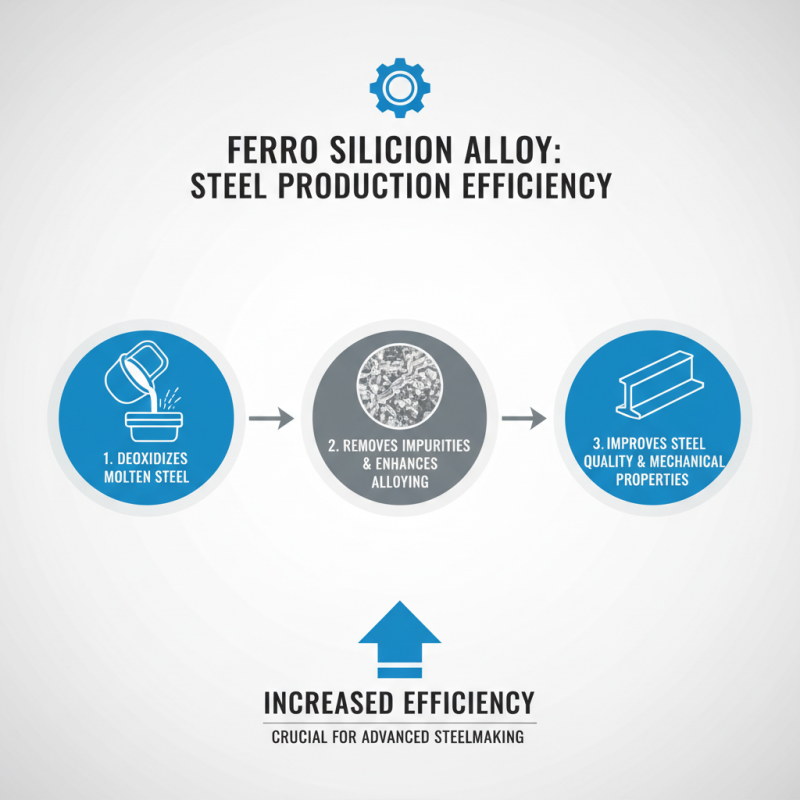
Ferro silicon alloy plays a crucial role in enhancing steel production efficiency. Its use significantly improves the quality of steel by controlling its chemistry. This alloy is essential for deoxidizing molten steel. It removes impurities and enhances alloying elements. By doing so, it ensures that the final product has the desired mechanical properties.
In the production process, ferro silicon contributes to better fluidity in the molten steel. This fluidity aids in pouring and casting, reducing defects. Nevertheless, improper handling can lead to variations in the steel's composition. Such inconsistencies can undermine the advantages of using ferro silicon. Regular testing and monitoring during production are necessary. This ensures that the alloy is functioning as intended.
Additionally, ferro silicon acts as a reducing agent in producing ferroalloys. This characteristic enhances the efficiency of other alloys as well. However, balancing the ratios is essential. Too much ferro silicon can alter the steel's characteristics. Awareness of these factors is critical for manufacturers.
Optimizing Metal Alloying Techniques Using Ferro Silicon
Ferro silicon plays a vital role in metal production, especially in enhancing the alloying process. This alloy, composed of iron and silicon, improves the quality of metal. It acts as a deoxidizer and a source of silicon for steelmaking. The right amount of ferro silicon can refine the microstructure of the metal, leading to better strength and durability.
When utilizing ferro silicon, it's essential to consider the optimal percentages for various applications. Too much ferro silicon can lead to brittleness, which undermines metal integrity. Adjusting its levels during production can require careful calculation and testing. Each type of metal product might respond differently, making it critical to analyze the effects thoroughly.
The temperature during the melting process also significantly impacts the effectiveness of ferro silicon. Maintaining appropriate temperatures can ensure better dissolution of the alloy in the molten metal. Additionally, incorporating ferro silicon at the right stage of production is crucial. These details are often overlooked but can determine the success of the metal's final properties. Experimentation in varying conditions may provide valuable insights, though it can lead to inconsistent results at first. Such challenges highlight the complexity of optimizing alloying techniques.
Impact of Ferro Silicon Alloy on Metal Production
Impact of Ferro Silicon on Mechanical Properties of Steel Alloys
Ferro silicon alloy plays a critical role in enhancing the mechanical properties of steel alloys. This alloy acts as a deoxidizer and an alloying agent in the production of various steel grades. According to industry reports, the addition of around 75% ferrosilicon can improve tensile strength by 20% to 30% in certain steel formulations. This remarkable enhancement is primarily due to the presence of silicon, which refines the grain structure of the steel.
However, not all effects are entirely positive. While ferro silicon boosts hardness and tensile strength, it may also impact ductility negatively. Excessive silicon content can lead to brittleness in certain steel types. Studies indicate that optimal silicon levels should be carefully controlled. The ideal range typically lies between 1% and 4% for well-balanced mechanical properties. Achieving this balance requires careful experimentation and a deep understanding of the metallurgical processes involved.
Interestingly, the use of ferro silicon is not limited to steel. It also finds applications in cast iron production, contributing to enhanced stability and durability. Nonetheless, variability in ore and refining processes may lead to inconsistencies in alloy performance. Continuous research and development are essential for further understanding how ferro silicon interacts with different elements in steel manufacturing.
How to Use Ferro Silicon Alloy for Enhancing Metal Production? - Impact of Ferro Silicon on Mechanical Properties of Steel Alloys
| Property |
Ferro Silicon (FeSi) Contribution |
Effects on Steel Alloys |
| Tensile Strength |
Increases tensile strength by up to 20% |
Enhances load-bearing capacity |
| Impact Toughness |
Improves impact resistance |
Reduces brittleness in low temperatures |
| Ductility |
Enhances ductility |
Facilitates forming and shaping processes |
| Corrosion Resistance |
Improves resistance to oxidation |
Increases material lifespan |
| Heat Resistance |
Enhances heat resistance properties |
Ideal for high-temperature applications |
Cost-Benefit Analysis of Ferro Silicon in Metal Manufacturing Processes
Ferro silicon alloy plays a pivotal role in metal manufacturing. Its use can significantly influence production costs and efficiency. Understanding the cost-benefit dynamics is crucial for manufacturers. The initial investment in ferro silicon is often offset by long-term gains. The alloy enhances the strength and quality of steel. This results in less material waste during production processes.
However, it's important to evaluate the market trends and price volatility. Ferro silicon prices can fluctuate based on demand. This variability might complicate budgeting for manufacturers. A careful analysis of supply sources is therefore essential. Manufacturers should understand when to buy in bulk to reduce costs.
Moreover, the benefits of improved product quality must be weighed against potential risks. High-quality metals can lead to increased market demand and better pricing. But, over-reliance on one alloy might pose challenges. Such dependencies can often catch manufacturers off guard. Therefore, maintaining a diverse supplier network can be a strategic move. Balancing costs with product integrity should always be a priority.