Choosing the right Silicon Carbide Crucible can determine whether a furnace run succeeds or fails. The decision affects melting speed, metal purity, energy use, and crucible life. A vessel that looks strong may still crack after repeated thermal shocks.
Dr. John Palmour, a respected silicon carbide materials expert and co-founder of Wolfspeed, has emphasized the material’s demanding nature: “Silicon carbide is a very hard material, and that makes it difficult to process.” His observation applies directly to crucible selection. Manufacturing quality, density, chemical resistance, and firing temperature all influence real performance.
This guide presents seven practical tips for evaluating a Silicon Carbide Crucible. It considers the alloy being melted, operating temperature, furnace atmosphere, wall thickness, and expected service cycles. It also examines supplier documentation, because attractive specifications can hide important gaps. Look closely.
In practice, buyers sometimes focus only on price. That choice may create more waste through cracking, contamination, or frequent replacement. Even experienced technicians can overlook thermal expansion when changing furnace size. I have seen reliable-looking crucibles fail because their shape did not match the heating pattern.
The best selection process combines published data with field experience. Ask about testing methods, raw material quality, and performance with your specific alloy. No crucible is perfect. The goal is dependable performance under your actual conditions, not impressive claims on a sales page.
Choosing a silicon carbide crucible requires more than checking its advertised temperature rating. Its properties determine whether it performs safely and consistently in a furnace.
Start with material purity. Higher purity can reduce contamination during aluminum, copper, and other nonferrous alloy melting. Check thermal conductivity, too. Efficient heat transfer can shorten heating time and reduce energy waste. The crucible should also tolerate repeated thermal cycling. Sudden temperature changes may cause cracking.
Size matters. Select a capacity that leaves enough space for expansion and metal movement. An oversized crucible may heat unevenly. An undersized one can overflow during stirring. Examine wall thickness and shape for your furnace. The base must sit evenly, without rocking. Small details matter.
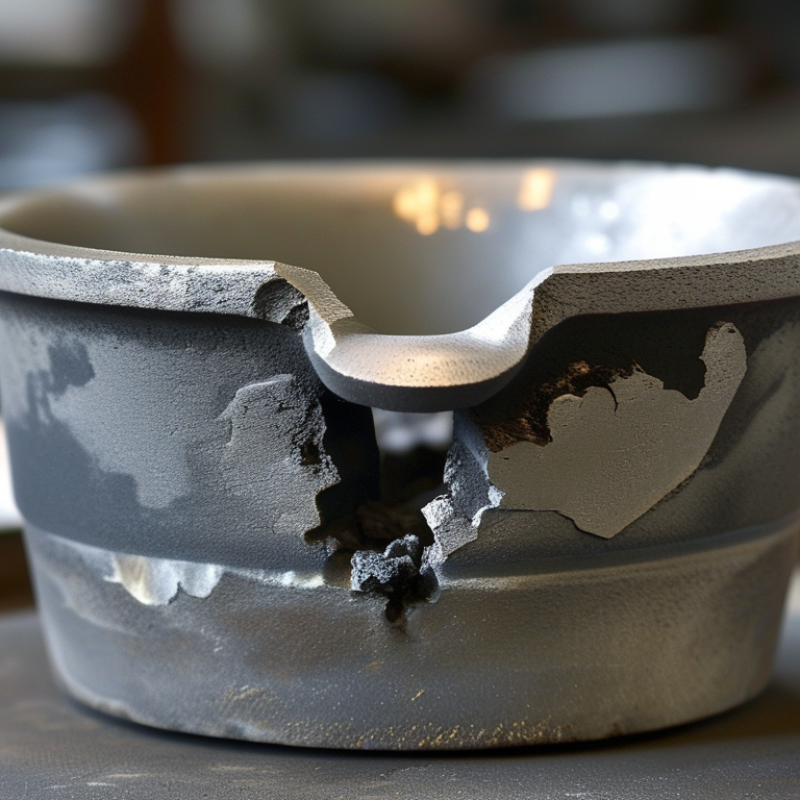
Chemical compatibility is another practical concern. Slag, fluxes, and molten alloys can attack the crucible surface. Confirm resistance before regular use. Low porosity helps limit metal penetration and makes cleaning easier. Density can also indicate manufacturing consistency, although it should not be the only test. Inspect for chips, hairline cracks, or dampness before heating. Never rush this check. A cool crucible still needs gradual preheating. Even a strong silicon carbide crucible has limits. In real furnace work, operators sometimes focus on maximum temperature and overlook thermal shock, handling, or storage. That mistake is understandable, but costly. Keep crucibles dry, lift them with suitable tools, and replace them when damage becomes visible.

Choosing a silicon carbide crucible starts with the melting process, not the furnace opening. Measure the charge, alloy expansion, pouring angle, and working clearance. A crucible that is too small may overflow during stirring or thermal expansion. An oversized vessel wastes energy and encourages uneven heating. In practice, leave roughly 15–20% free volume for metal movement and safe handling. This allowance is not universal. Dense charge materials can settle differently.
Shape affects heat flow and pouring control. A narrow, tall crucible suits limited furnace space and can reduce the exposed melt surface. It may, however, make skimming and visual inspection difficult. A wider bowl supports easier loading, stirring, and slag removal. Its larger surface can increase oxidation or heat loss in some operations. Choose a pointed or pouring-lip design when transfer accuracy matters. Use a stable, rounded base when lifting equipment and operator control are the main concerns. Small details matter.
Match wall thickness to cycle temperature, heating rate, and handling frequency. Thick walls retain heat but respond more slowly to temperature changes. Thin walls heat quickly, yet they may tolerate fewer severe cycles. Check dimensions against tongs, clamps, and the furnace hearth, not just the drawing. Record cracking, erosion, and pouring behavior after each campaign. That record improves the next selection. My early estimates were too optimistic. Actual charging habits changed the required size.
| Tip | Melting Process or Application | Preferred Crucible Shape | Size-Matching Guidance | Useful Operating Range | Why It Matters |
|---|---|---|---|---|---|
| 1. Start with the required melt mass | Batch melting of aluminum, copper alloys, zinc alloys, or other non-ferrous metals | Standard round crucible with a stable base | Choose a rated capacity about 10–20% above the intended metal charge. Do not fill to the rim. | Example: a 10 kg charge generally requires a crucible rated above 10 kg for the specific metal. | Additional freeboard helps control splashing, thermal expansion, dross buildup, and pouring losses. |
| 2. Match the diameter to the heating zone | Induction melting | Cylindrical or slightly tapered round crucible | The outside diameter should fit the furnace coil with the clearance specified by the furnace designer. The crucible should remain centered. | Keep the charge within the coil's effective heating length; avoid a crucible that is too short or too wide for the coil. | Correct coupling improves heating uniformity and reduces the risk of localized overheating or mechanical contact. |
| 3. Use a taller profile for controlled batch melting | Gas-fired or resistance-heated furnaces with limited floor area | Tall cylindrical or tapered crucible | A taller design can provide the required volume without increasing the furnace footprint, provided the furnace chamber has enough vertical clearance. | Allow space above the crucible for the lid, burner flame path, lifting tools, and thermal expansion. | The correct height-to-diameter ratio supports better furnace fit and easier handling without sacrificing working capacity. |
| 4. Select a wide opening for frequent charging | Manual charging of ingots, returns, or larger solid pieces | Wide-mouth bowl or open-top cylindrical crucible | The opening should be large enough for the largest routine charge piece, while maintaining sufficient wall thickness and freeboard. | Use the manufacturer's internal-volume rating rather than estimating capacity from outside dimensions. | A suitable opening reduces impact damage during loading and makes skimming and visual inspection easier. |
| 5. Consider pouring ergonomics | Manual pouring or tilting-furnace operation | Bowl-shaped or tapered crucible with a defined pouring lip | Select a size that can be safely lifted or tilted at the actual molten-metal mass, including the crucible's own weight. | Keep the liquid level low enough to prevent overflow during rotation and deceleration. | A practical pouring profile improves stream control and reduces operator exposure to spills and splashing. |
| 6. Account for alloy density and temperature | Changing between metals or operating at different melt temperatures | Shape selected according to furnace fit, charge geometry, and handling method | Calculate capacity by volume and density; a crucible holding 10 kg of aluminum will not hold 10 kg of copper at the same fill level. | Aluminum melts at approximately 660°C, while copper melts at approximately 1085°C; verify the crucible's rated temperature and alloy compatibility. | Density, temperature, fluxes, and holding time all affect service life and the safe working capacity. |
| 7. Leave room for dross and thermal movement | Longer holding cycles, flux use, or melts that generate surface oxides | Straight-sided or gently tapered crucible with adequate top clearance | Reserve working volume for dross, skimming tools, and expansion; do not use the nominal brimful volume as the operating capacity. | Maintain the clearance required by the furnace and avoid sudden heating or cooling. | Freeboard and gradual temperature changes reduce overflow risk and thermal-shock damage. |
A silicon carbide crucible must survive more than extreme heat. It also faces sudden temperature changes, chemical attack, and repeated heating cycles. In practical furnace work, thermal shock often causes failure before maximum temperature is reached.
Tip 1: Check the stated temperature rating. Choose a crucible with a safe working range above your process temperature, not merely equal to it. Ratings may vary with atmosphere, load, and heating speed.
Tip 2: Examine thermal shock performance. Dense silicon carbide usually transfers heat efficiently, reducing internal temperature differences. Still, rapid loading or cooling can create cracks. Slow preheating matters.
Tip 3: Ask for test data. Reliable suppliers should provide information about thermal expansion, strength, porosity, and cycle life. A polished specification sheet is not enough.
Tip 4: Match the crucible size to the furnace. Large, thick walls may heat unevenly. This is easy to overlook. Measure the heating zone carefully.
Tip 5: Inspect the surface before use. Look for hairline cracks, chipped rims, or rough patches. Small defects can grow during repeated thermal cycling.
Tip 6: Consider the material being melted. Fluxes, salts, and reactive metals can attack the crucible surface. Temperature resistance alone does not guarantee service life.
Tip 7: Control the heating procedure. Avoid placing a cold crucible directly into a fully heated furnace. Preheating reduces stress, although the ideal schedule depends on wall thickness and furnace design.
Real-world results can differ from laboratory values. I would record each firing cycle, cooling time, and visible change. That record may reveal a better choice than a higher advertised rating.
Crucible purity should match the metal, not simply the highest available grade. Aluminum and zinc usually tolerate standard silicon carbide compositions. However, trace iron, silicon, or ash can affect sensitive alloys. Copper and brass may require cleaner surfaces to reduce discoloration and unwanted inclusions. Small residues matter.
For nickel-based alloys and high-temperature iron melts, choose a dense crucible with controlled impurities and strong thermal stability. Precious metals demand even closer attention. A minor contaminant can change color, conductivity, or assay results. Check the supplier’s chemical analysis, maximum service temperature, porosity, and firing history. Do not rely on purity percentages alone. Manufacturing quality also affects performance.
Practical experience often reveals details that specifications miss. Inspect the inner wall for chips, glaze defects, and embedded particles before use. Preheat gradually, especially when the crucible has been stored in a damp area. This reduces thermal shock and surface cracking. Keep different crucibles for incompatible metals when contamination could become costly. It is tempting to select one universal grade. That choice may save inventory space, but it can create avoidable quality problems. Review actual melt results and adjust the grade when evidence disagrees with the original selection.
Durability starts with temperature cycling, not maximum temperature alone. Choose a crucible rated above your operating temperature, with documented thermal-shock testing. Silicon carbide offers high thermal conductivity, commonly reported near 120–200 W/m·K. This helps reduce hot spots. Check the wall thickness and base design. Thin walls may heat quickly, but they can crack sooner. Measure the bath. Record heating rates, cooling intervals, and the number of usable cycles.
Compatibility requires more than checking the alloy name. Molten aluminum, copper, iron, and reactive salts can attack different surface compositions. Review chemical-resistance data at your actual temperature. Ask whether the crucible contains protective coatings or binders. Request test results, not optimistic claims. ASTM C863 provides useful guidance for testing refractory materials, although it cannot replace production trials. Small trials matter.
Cost should include labor, downtime, energy, and rejected metal. The U.S. Geological Survey’s Mineral Commodity Summaries 2024 reported roughly 3.6 million metric tons of global silicon-metal production in 2023, showing the scale of high-temperature processing demand. Market reports also show wide price differences for silicon-carbide products, but their methods are not always transparent. Be cautious. Supplier quality needs batch records, dimensional inspection, traceable raw materials, and clear replacement policies. ISO 9001 certification helps, but it does not prove crucible performance. I have seen inexpensive units perform well, and premium units disappoint. The better decision comes from measured cycle life, not catalog language.