What is Silicon Metal Powder and its Top Applications in 2026?
Silicon Metal Powder is gaining significant attention as industries evolve. Its unique properties make it valuable for various applications. Understanding its characteristics helps us explore the future of technology.
In 2026, demand for Silicon Metal Powder is expected to rise. This increase stems from its role in the manufacturing of silicones and semiconductors. These industries require materials that offer strength and heat resistance. Silicon Metal Powder provides these qualities, making it essential for innovative tech solutions.
While the potential of Silicon Metal Powder is clear, challenges remain. The sourcing and processing of silicon can be complex. Environmental concerns also require careful consideration. As we look ahead, continuous improvement in production methods will be key. Embracing these changes ensures a sustainable future for Silicon Metal Powder in various applications.
What is Silicon Metal Powder?
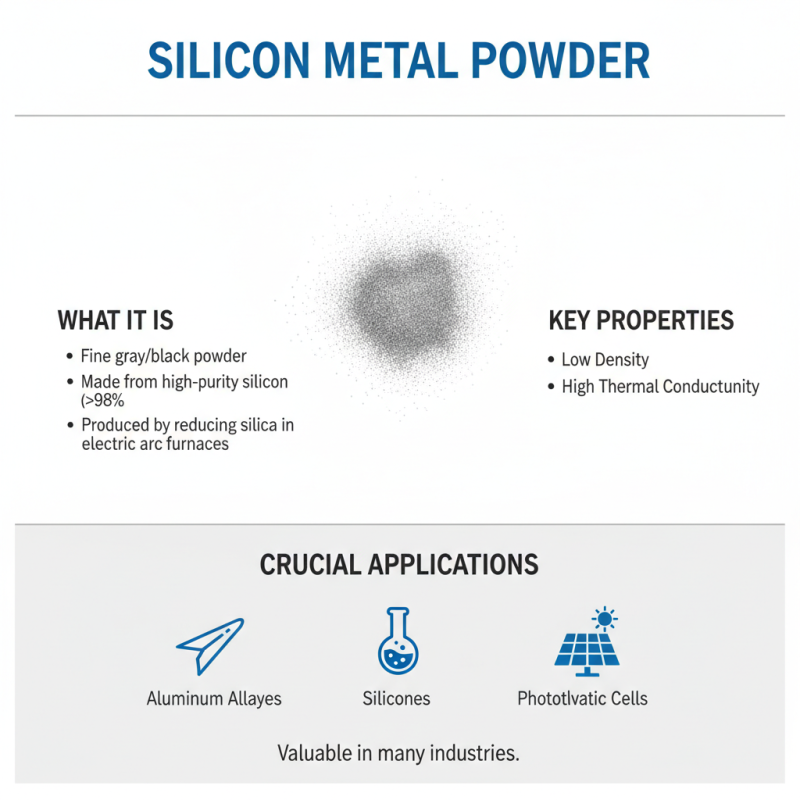
Silicon metal powder is a fine gray or black powder made from high-purity silicon. It is produced by reducing silica in electric arc furnaces. This process results in silicon with a purity level exceeding 98%. Silicon metal powder is crucial in various applications, including aluminum alloys, silicones, and photovoltaic cells. Its unique properties, like low density and high thermal conductivity, make it valuable in many industries.
Tips: When purchasing silicon metal powder, ensure you verify the purity level. Different applications require specific grades. Understanding the intended use helps in selecting the right product.
In the automotive sector, silicon metal powder plays a role in manufacturing aluminum alloys. These alloys enhance vehicle performance by reducing weight. In electronics, this powder is essential for making semiconductors. However, sourcing high-quality silicon can be challenging. Variability in production methods can affect consistency.
Tips: Keep an eye on market trends for silicon metal powder. Innovations can impact availability and price. It’s wise to stay informed to make better purchasing decisions.
Properties and Characteristics of Silicon Metal Powder
Silicon metal powder is gaining attention due to its unique properties. It is known for its high purity and excellent thermal conductivity. These characteristics make it ideal for various industrial applications. Engineers and researchers seek materials that enhance performance and durability. Silicon metal powder fits this demand perfectly.
The powder is also lightweight yet robust. This balance allows for flexibility in manufacturing processes. It can be easily shaped and mixed with other materials. However, handling fine powders requires caution. Safety protocols must be strictly followed. Dust can pose inhalation risks. Users should wear the appropriate protective gear.
In terms of applications, silicon metal powder is used in the production of silicones and electronics. Its role in solar panels is significant and growing. As technology evolves, the powder's versatility becomes vital. Industries may need to adapt and learn new handling techniques. This dynamic landscape poses challenges but also opportunities for innovation. Silicon metal powder is shaping the future of many sectors.
Key Industries Utilizing Silicon Metal Powder
Silicon metal powder is gaining traction across various industries. Its unique properties drive its applications in sectors like electronics, automotive, and renewable energy. In electronics, silicon powder is essential for manufacturing semiconductors. These components are integral to modern devices, ensuring they function efficiently and reliably.
The automotive industry also benefits significantly from silicon metal powder. It is used in the production of lightweight materials for electric vehicles. These materials enhance energy efficiency and improve overall vehicle performance. Furthermore, silicon metal powder plays a crucial role in solar panel manufacturing. Its high purity enhances the efficiency of photovoltaic cells, making renewable energy solutions more viable.
Despite its advantages, the industry faces challenges. Sourcing high-quality silicon metal powder can be inconsistent. Moreover, companies must navigate environmental regulations while scaling their production. These factors urge stakeholders to explore new methods for improving quality and sustainability in silicon metal powder. The path ahead includes innovation and a commitment to responsible practices.
Top Applications of Silicon Metal Powder in 2026
Silicon metal powder is a versatile material. It plays a significant role in various industries. In 2026, its applications will continue to expand, especially in advanced manufacturing and technology sectors.
One major application is in the production of silicon-based ceramics. This material offers excellent thermal and electrical properties, making it ideal for high-performance applications. Another important use is in the automotive industry. Silicon metal powder is essential for creating lightweight components. These components can improve fuel efficiency and reduce emissions in vehicles.
In electronics, silicon metal powder is crucial for semiconductors. It enhances the conductivity of components, enabling faster and more efficient devices. However, sourcing high-quality silicon remains a challenge. Challenges include environmental concerns associated with mining and production. This requires continuous innovation and sustainability efforts within the industry.
What is Silicon Metal Powder and its Top Applications in 2026?
| Application |
Description |
Projected Market Growth (2026) |
Key Benefits |
| Aluminum Alloys |
Silicon metal powder is used to enhance the strength and durability of aluminum alloys. |
8% CAGR |
Improved corrosion resistance and weldability. |
| Silicon Carbide |
Used in semiconductor applications due to its high thermal conductivity and electrical resistance. |
10% CAGR |
High performance in high-temperatures and harsh environments. |
| Chemical Production |
Silicon metal is a critical component in the production of silicones and silanes. |
7% CAGR |
Versatile applications in various industries, including automotive and construction. |
| Solar Cells |
Utilized in photovoltaic cells for energy conversion. |
12% CAGR |
Increased efficiency and cost-effectiveness in solar technology. |
| Additives in Advanced Ceramics |
Enhances durability and wear resistance of ceramic materials. |
9% CAGR |
Improves mechanical properties and thermal stability. |
Future Trends and Innovations in Silicon Metal Powder Usage
Silicon metal powder is gaining traction due to its unique properties. It has applications across various industries, and trends indicate shifts in its usage. By 2026, demand for silicon metal powder is projected to grow significantly. Reports suggest a potential compound annual growth rate (CAGR) of over 9% in the coming years. This growth stems from its increasing use in electronics and renewable energy sectors.
Innovations in production techniques are also emerging. New methods can enhance purity levels and reduce particle size. This leads to better performance in semiconductor applications. Additionally, the focus on sustainability is driving the development of eco-friendly production practices. Real-time data shows that cleaner production methods can reduce carbon emissions by nearly 30%.
Despite these advancements, challenges remain. The market faces fluctuations in raw material prices. The geopolitical landscape can also impact supply chains. Companies need strategies to navigate these uncertainties. Continuous R&D is essential for staying competitive in this evolving landscape.