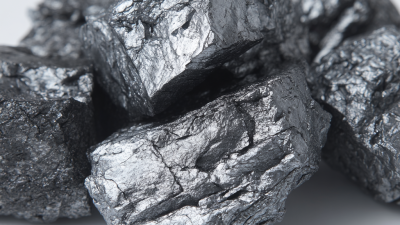
Why Choose Silicon Manganese for Your Steel Production Needs?
In the ever-evolving steel industry, the choice of raw materials can significantly influence production quality and efficiency. Dr. Emily Wang, a leading expert in metallurgical engineering, asserts, "The use of Silicon Manganese is crucial for optimizing steel's mechanical properties." This statement underscores the importance of Silicon Manganese in modern steel production.
Silicon Manganese, a vital ferroalloy, enhances both strength and durability in steel. Integrating this alloy can lead to cost savings. Moreover, it improves the production of high-strength steels that meet stringent industrial standards. However, it is essential to assess suppliers' quality and consistency.
While many industries recognize these benefits, some companies still overlook the value of Silicon Manganese. They may stick to traditional materials that do not leverage advanced metallurgical techniques. As the steel market grows competitive, failure to adapt can mean missed opportunities. Investing in Silicon Manganese might be the decisive factor in staying ahead in the market.
Understanding Silicon Manganese: Composition and Properties for Steel
Silicon manganese is a critical alloy in steel production. Its unique composition combines silicon, manganese, and iron. This combination enhances steel's strength and ductility. The addition of silicon improves deoxidation during melting. Manganese boosts hardenability and resistance to wear. Together, they form a robust alloy.
Understanding the properties of silicon manganese is essential for manufacturers. It can significantly impact the quality of steel. For instance, a proper balance of these elements prevents defects in the final product. However, not all silicon manganese is created equal. Variability in composition can lead to inconsistencies in steel properties. This unpredictability can pose challenges in high-demand applications.
Producers must source high-quality silicon manganese to ensure reliability. Testing and analysis should be routine in the quality control process. Engaging with trusted suppliers can mitigate risks associated with inferior materials. The characteristics of silicon manganese should guide production choices. Knowledge of its effects can lead to better steel products.
Key Benefits of Using Silicon Manganese in Steel Alloys Industry
Silicon manganese is increasingly favored in the steel alloys industry for its unique advantages. One of the key benefits is its ability to enhance the strength and durability of steel. The addition of silicon improves the alloy's resistance to oxidation. Manganese aids in deoxidation, which is vital during steel production. This combination creates high-quality steel that withstands extreme conditions.
Another notable benefit is cost-effectiveness. Silicon manganese often replaces multiple additives in the steel-making process. This simplification can lead to reduced production costs and improved efficiency. Moreover, using silicon manganese can improve yields, requiring less raw material to produce the same volume of steel. These factors contribute to a more sustainable approach in steel manufacturing.
Yet, there are challenges. Not every steel application benefits equally from silicon manganese. Its effectiveness can vary based on the steel grade and specific requirements. Some steelmakers may need to experiment with proportions to achieve optimal results. Balancing performance and cost might require ongoing adjustments. Manufacturers must evaluate their processes continuously, which can be a complex task. Understanding the right applications is crucial for maximizing the benefits of silicon manganese.
Market Demand Trends for Silicon Manganese in Global Steel Production
The global steel production market is evolving rapidly.
Silicon manganese has become increasingly vital due to its unique properties.
It serves as a critical alloying agent, enhancing the strength and durability of steel.
In 2023, demand for this alloy surged by approximately 15%.
This rise is linked to the growing construction and automotive industries.
Emerging economies are major contributors to this trend. As countries like India and Brazil industrialize,
they require more robust steel for infrastructure projects. Silicon manganese helps meet these needs effectively.
However, the supply chain can be volatile. Factors like mining regulations, environmental concerns, and geopolitical tensions can disrupt production.
Producers must adapt to these challenges. Innovations in extraction and processing are essential.
Companies are exploring sustainable practices to enhance reliability. While demand is high, the market's fluctuations require careful navigation.
Keeping abreast of these dynamics is crucial for those involved in steel production.
Embracing change can be beneficial, but risks remain.
Comparative Analysis: Silicon Manganese vs. Other Alloying Elements
Silicon manganese is gaining traction as a preferred alloying element in steel production. Its effectiveness lies in its ability to enhance steel's mechanical properties, particularly strength and toughness. According to a recent report from the International Iron and Steel Institute, steel grades with silicon manganese show a remarkable increase in tensile strength, indicating its importance in modern metallurgy.
Comparatively, traditional elements like carbon and nickel can be effective but often come with drawbacks. Excessive carbon can lead to brittleness, while high nickel content increases costs significantly. Silicon manganese, however, offers an economical alternative. It not only improves fluidity during casting but also reduces the risk of oxidation in molten steel. This adaptability makes Silicon manganese appealing for various steel grades.
Tips: Always consider the specific requirements of your steel application when choosing alloying elements. Some projects may benefit from a balanced combination of silicon manganese and traditional elements. Additionally, smaller operations might overlook the cost-efficiency of silicon manganese, focusing only on immediate needs. Reflecting on long-term sourcing and quality is crucial for sustainability in production.
Why Choose Silicon Manganese for Your Steel Production Needs? - Comparative Analysis: Silicon Manganese vs. Other Alloying Elements
| Alloying Element |
Benefits |
Cost per Ton |
Usage in Steel Production |
| Silicon Manganese |
Improved strength and ductility |
$800 |
High levels in moderate to high carbon steels |
| Ferro Manganese |
Deoxidizing agent, enhances toughness |
$750 |
Common in low to medium carbon steels |
| Silicon |
Increases strength and electrical properties |
$600 |
Used in electrical steels |
| Nickel |
Improves toughness and corrosion resistance |
$1500 |
Common in stainless steels |
| Chromium |
Enhances hardness and wear resistance |
$1200 |
Used in high carbon and stainless steels |
Impact of Silicon Manganese on Mechanical Properties of Steel Products
Silicon manganese is increasingly recognized for its vital role in steel production. It serves as a crucial alloying element that enhances the mechanical properties of steel products. When added to steel, silicon manganese improves tensile strength and impact resistance. This is particularly important in construction and manufacturing, where structural integrity is paramount.
The addition of silicon manganese affects the microstructure of steel. It promotes the formation of fine grains, which contribute to increased durability and toughness. However, the optimal percentage of silicon manganese can vary. Too much can lead to unwanted brittleness, affecting the steel's performance.
Steel producers must carefully balance the composition. Understanding how silicon manganese interacts with other alloying elements is essential. Testing different ratios in small batches can lead to improved results in end products. This precision ensures that steel meets the demands of various applications, from automotive parts to heavy machinery components.
Impact of Silicon Manganese on Mechanical Properties of Steel Products