What are the Benefits of Silicon Carbide Ceramic in Industry?
Silicon Carbide Ceramic is transforming various industries. As Dr. Emily Chen, a leading expert in advanced materials, states, "Silicon Carbide Ceramic is a game-changer for durability." This material offers unique advantages over traditional ceramics. Its high thermal conductivity makes it ideal for demanding applications.
Manufacturers enjoy increased efficiency and reliability. Silicon Carbide Ceramic resists wear and corrosion, minimizing maintenance costs. This longevity proves crucial in sectors like aerospace and automotive. However, adopting Silicon Carbide Ceramic can require significant initial investment. Some companies may hesitate to transition from familiar materials.
Balancing costs with long-term benefits is essential. Industries must reflect on how they can leverage Silicon Carbide Ceramic’s strengths without straining budgets. The potential for innovation is vast, and it’s worth exploring despite the challenges. Embracing Silicon Carbide Ceramic could lead to breakthroughs in performance and sustainability.

Benefits of Silicon Carbide Ceramic in High-Temperature Applications
Silicon carbide (SiC) ceramics have gained significant traction in high-temperature applications. Their ability to withstand extreme temperatures, often exceeding 1,600°C, makes them indispensable in various industrial sectors. Many studies reveal that SiC exhibits superior thermal stability compared to traditional materials. This feature reduces the risk of thermal degradation, enhancing the longevity of components.
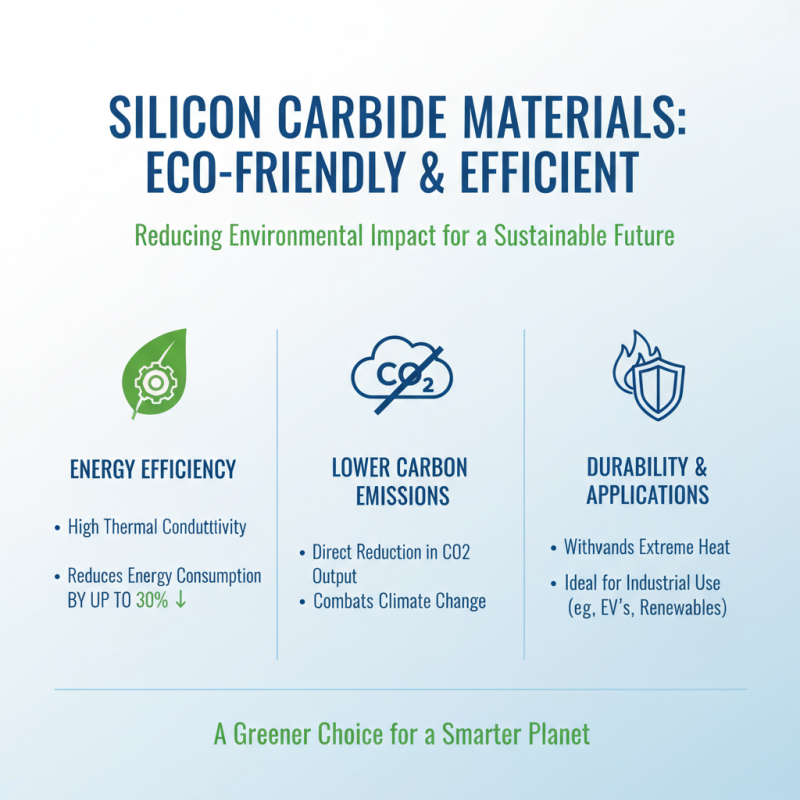
In industries like aerospace and automotive, SiC ceramics are revolutionizing efficiency. A recent report by the Department of Energy highlighted that SiC components can increase energy efficiency by up to 20%. This reduction translates to lower operational costs. Additionally, SiC’s thermal conductivity allows for better heat dissipation. This improves the overall performance of engines and turbines operating at high temperatures.
However, working with SiC ceramics comes with challenges. The material can be brittle, leading to potential failures under impact or stress. Moreover, the manufacturing processes can be complex and costly. These factors necessitate careful consideration when integrating SiC ceramics into production. Organizations must weigh the benefits against potential risks and expenses as they explore advanced applications.
Benefits of Silicon Carbide Ceramic in High-Temperature Applications
Silicon carbide ceramics offer various benefits in industrial applications, especially at high temperatures. The chart above illustrates the percentage of key advantages such as thermal conductivity, mechanical strength, chemical resistance, wear resistance, and electrical conductivity. These properties make silicon carbide ceramics highly valuable in high-performance environments.
Enhanced Wear Resistance of Silicon Carbide Ceramics
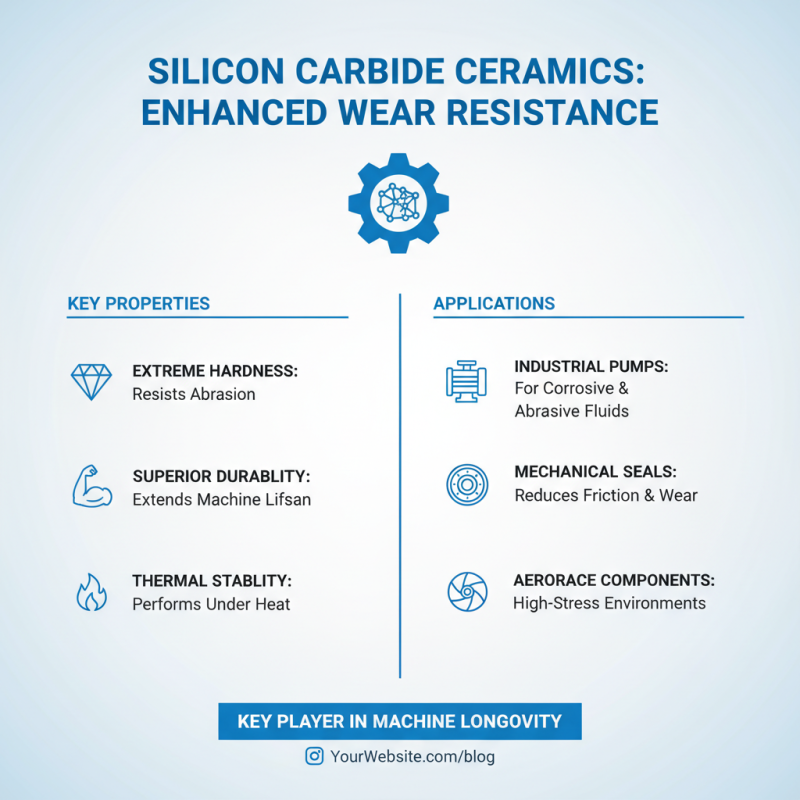
Silicon carbide ceramics are gaining traction in various industries, especially for their wear-resistant properties. This material demonstrates remarkable hardness, standing up to abrasive forces. It’s not just a buzzword; it's a key player in enhancing machine durability. For example, components made from silicon carbide can withstand intense friction, making them ideal for applications in pumps and seals.
The enhanced wear resistance of silicon carbide ceramics is noteworthy. Its structure allows for minimal material loss over time. As machines operate, they often face grit and dust that can erode standard materials. Silicon carbide offers a robust alternative, prolonging the service life of critical components. Despite its advantages, there is an underlying challenge in manufacturing processes. For instance, achieving the right purity and microstructure can be tricky. Minor impurities can affect the material's performance.
Moreover, while its high-performance features are appealing, the cost can be a consideration. Investing in silicon carbide ceramics may not be suitable for every application. In some cases, traditional materials still serve adequately. Businesses should weigh the benefits against potential production issues or expenses. Choosing the right materials is not always straightforward, and requires careful thought.
Electrical and Thermal Conductivity Advantages of Silicon Carbide
Silicon carbide ceramic is gaining popularity in various industries due to its remarkable electrical and thermal conductivity. This material stands out because of its superior ability to conduct heat, which makes it ideal for high-temperature applications. For manufacturing processes like aerospace and electronics, silicon carbide can efficiently dissipate heat, preventing overheating in critical components.
Tips: Ensure proper insulation when using silicon carbide in electronic devices. Good insulation enhances performance.
Moreover, its electrical conductivity is noteworthy. Silicon carbide can enhance power efficiency in electronic devices, minimizing energy losses. Its ability to operate at high voltages makes it suitable for power systems. It can handle extreme environments, such as high temperatures and harsh chemicals, thus prolonging equipment life.
Tips: Test for compatibility with other materials before implementation. Compatibility issues might lead to unexpected failures.
Despite various benefits, some challenges exist. The brittleness of silicon carbide can lead to cracking under stress. This requires careful consideration when designing components. Addressing these concerns early on can maximize the advantages of silicon carbide in industrial applications while mitigating risks.
What are the Benefits of Silicon Carbide Ceramic in Industry? - Electrical and Thermal Conductivity Advantages of Silicon Carbide
| Property |
Silicon Carbide (SiC) |
Comparison Material |
Comparison Value |
| Electrical Conductivity |
High |
Silicon (Si) |
Medium |
| Thermal Conductivity |
Excellent |
Alumina (Al2O3) |
Low |
| Hardness |
9.5 Mohs |
Sapphire |
9 Mohs |
| Thermal Stability |
Up to 1600°C |
Silicon Nitride (Si3N4) |
1200°C |
| Chemical Resistance |
High |
Zirconia (ZrO2) |
Moderate |
Cost-Effectiveness and Longevity of Silicon Carbide in Industrial Use
Silicon carbide (SiC) ceramic has gained attention for its cost-effectiveness and longevity in various industries. Reports indicate that SiC components can last up to ten times longer than traditional materials. This longevity reduces replacement costs and downtime, creating significant savings over time.
In harsh environments, SiC outperforms other ceramics. Its resistance to wear and corrosion makes it ideal for applications like semiconductor manufacturing. A study showed that using SiC could decrease maintenance costs by about 30%. However, some industries are still hesitant. The initial investment may seem daunting, even if the long-term benefits are substantial.
The energy sector, particularly, has embraced SiC technology. Data reveals that SiC can boost energy efficiency by nearly 20% in power systems. Yet, not all facilities have adopted this technology. Some remain uncertain about its long-term reliability in varied conditions. This hesitation highlights the need for ongoing research and development.